
MoE Fundamentals: Why Sparse Models Are the Future of AI
MoE models use under 10% of parameters per token—enabling trillion-parameter scaling without trillion-token compute.

 Training Multi-Billion-Parameter Models on a Single Cerebras System is Easy - CerebrasCerebras
 Visualizing Knowledge at Lightning Speed with Cerebras at Tako - CerebrasCerebras
 Breaking the Boundaries of Presence: Delphi's Digital Mind TechnologyCerebras
 Revolutionizing Life Science and Healthcare with Generative AI - CerebrasCerebras
 Cerebras Breaks Exascale Record for Molecular Dynamics Simulations - CerebrasCerebras
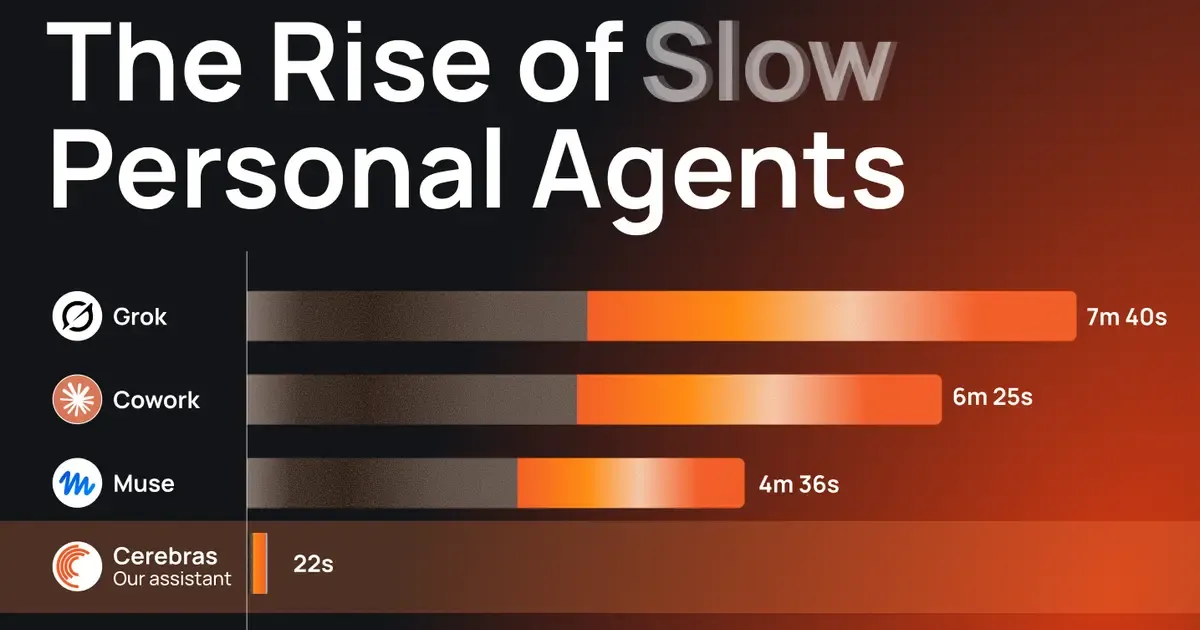 The rise of slow personal assistantsCerebras
 10 best AI observability tools for monitoring and evaluating agents in 2026Mintlify
 New Spanish and Turkish Language Models and Updated General Models - Deepgram Blog ⚡️Deepgram
 AI frameworks: Definition, types, and how to chooseZapier
 Transform and Future-Proof Your Architecture with MACHThenewstack
 Discovered Stacks: One Place for All Your InfrastructurePulumi
 How Hunch supercharged AI workflows with Modal SandboxesModal
 Anthropic integration with Modal brings scalable compute to Claude ScienceModal
 Summer Data Engineering RoadmapMotherduck
 Introducing DocChat: GPT-4 Level Conversational QA Trained In a Few Hours - CerebrasCerebras
 Cerebras Systems Enables GPU-Impossible™ Long Sequence Lengths Improving Accuracy in NaturalCerebras
 Cerebras Systems Raises $250M in Funding for Over $4B Valuation to Advance the Future of ArtificialCerebras
 How to Run Hugging Face Models Programmatically Using Ollama and TestcontainersDocker
 Improved infrastructure pricingVercel
 Iterating from design to deploy: Guillermo Rauch's talk at Figma Config 2023Vercel
