

arXiv:2605.26937v5 Announce Type: replace-cross Abstract: Parametric knowledge in large language models (LLMs) is a cornerstone of their success, yet remains poorly understood. Existing knowledge benchmarks typically rely on predefined questions (e.g., "What is the birth date of M.L. King?"), evaluating only knowledge that benchmark designers explicitly choose to query, a problematic availability bias.
Recommended
 Evaluating and improving AI agents for sequencing protocol understandingarXiv cs.AI
AtomTree: A Hierarchical Framework for State-Aware Embodied Instruction Following with LLMsarXiv cs.AI
AnyGoal: On World Model Generalization Beyond Expert RolloutsarXiv cs.AI
Reward-Adaptive Co-Evolution of Policy and RubricarXiv cs.AI
Multistep and Multivariate Time Series Explainability with GradientSHAP: A Wind Power Case StudyarXiv cs.AI
Ramanujan Challenge Results: AI-Assisted Evaluation Pipeline for Multi-Format ProofsarXiv cs.AI
 10 best AI observability tools for monitoring and evaluating agents in 2026Mintlify
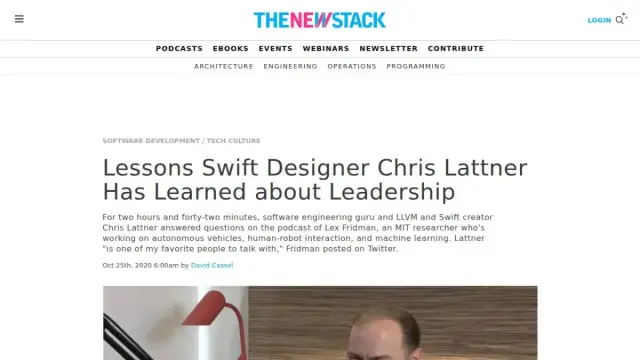 Lessons Swift Designer Chris Lattner Has Learned about LeadershipThenewstack
 Unpacking sandbox startup latency: why started ≠ readyModal
 How Ramp automated receipt processing with fine-tuned LLMsModal
 Cerebras Breaks Exascale Record for Molecular Dynamics Simulations - CerebrasCerebras
 How AI Assistants Can Decode GitHub Repos for UI WritersDocker
 A prompt guide to get the most out of HeyGen's new Video AgentHeygen
 Lies, damn lies, and benchmarksDeepgram
 How Beyond Retro scaled its retail operations trainingSynthesia
 Insurance Social Media Marketing: A Practical GuideHeygen
 How to structure documentation for both AI and human readersMintlify
 Configure the assistant - MintlifyMintlify
 SuperGLUE: Understanding a Sticky Benchmark for LLMsDeepgram
 ChatGPT: Putting the “AI” in “Plagiarism” worldwide?Deepgram